


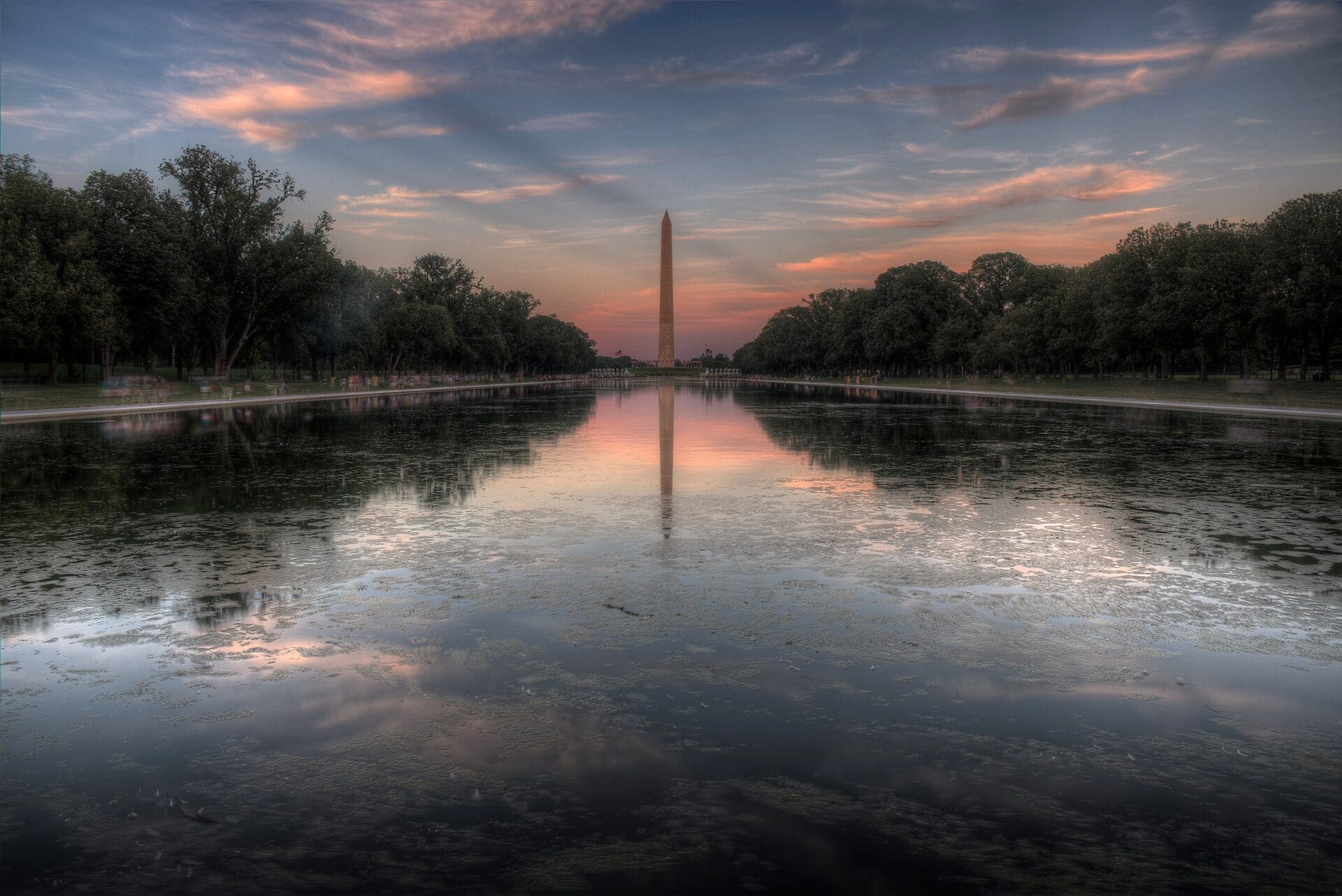
Reflecting pool discourse mirrors some important truths about what news spreads, and what doesn’t.
Does it ever feel like there’s an inverse relationship between the importance of a news story and how much we talk about it? It often feels like that to me, especially over the past week. How many posts have you scrolled past that were about the Lincoln Memorial Reflecting Pool or the White House cage match? If you’re not sure what I’m referencing, consider yourself blessed.
Meanwhile, these much more newsworthy stories have been getting less attention:
The proposed rewrite of federal grantmaking rules, which I wrote about in the previous newsletter.
The FCC appears to be pressuring Disney to censor its content, especially Jimmy Kimmel and The View. Even Sen. Ted Cruz, R-Texas, is pushing back.
The FBI raided the offices of a voter registration organization in Ohio. Critics of the raid argue it’s an abuse of government power and designed to intimidate similar left-leaning groups.
There are exceptions. The Iran peace deal has been getting a lot of well-deserved attention, for instance. But much of our political discourse is filled with news that just doesn’t matter that much to our daily lives. There are many reasons for this. We’re increasingly getting our news from social media, and the social media algorithms that push content to the top of our feeds prefer sensationalism.
There’s another factor that I think particularly helps explain why there has been so much news about the reflecting pool. There’s a phenomenon in committee meetings known as Bikeshedding, or Parkinson’s law of triviality, which states that committees will spend most of their time on the most trivial matters. This happens because the more important questions tend to be more complex, difficult to understand, and harder to resolve, whereas trivial questions are easier for everyone to grasp. Social media has become like one big committee meeting. These “committees” will naturally gravitate to the most trivial matters because they’re easy to understand.
Instead of getting your news from social media, go directly to a reputable news source. (Personally, I like newsletters. I can read the news directly in my email and there are fewer ads and pop-ups to deal with.) You may still get drawn into trivial discussions, but at least you can stay informed about the important stuff along the way.
Tell Your Pastor About J29!
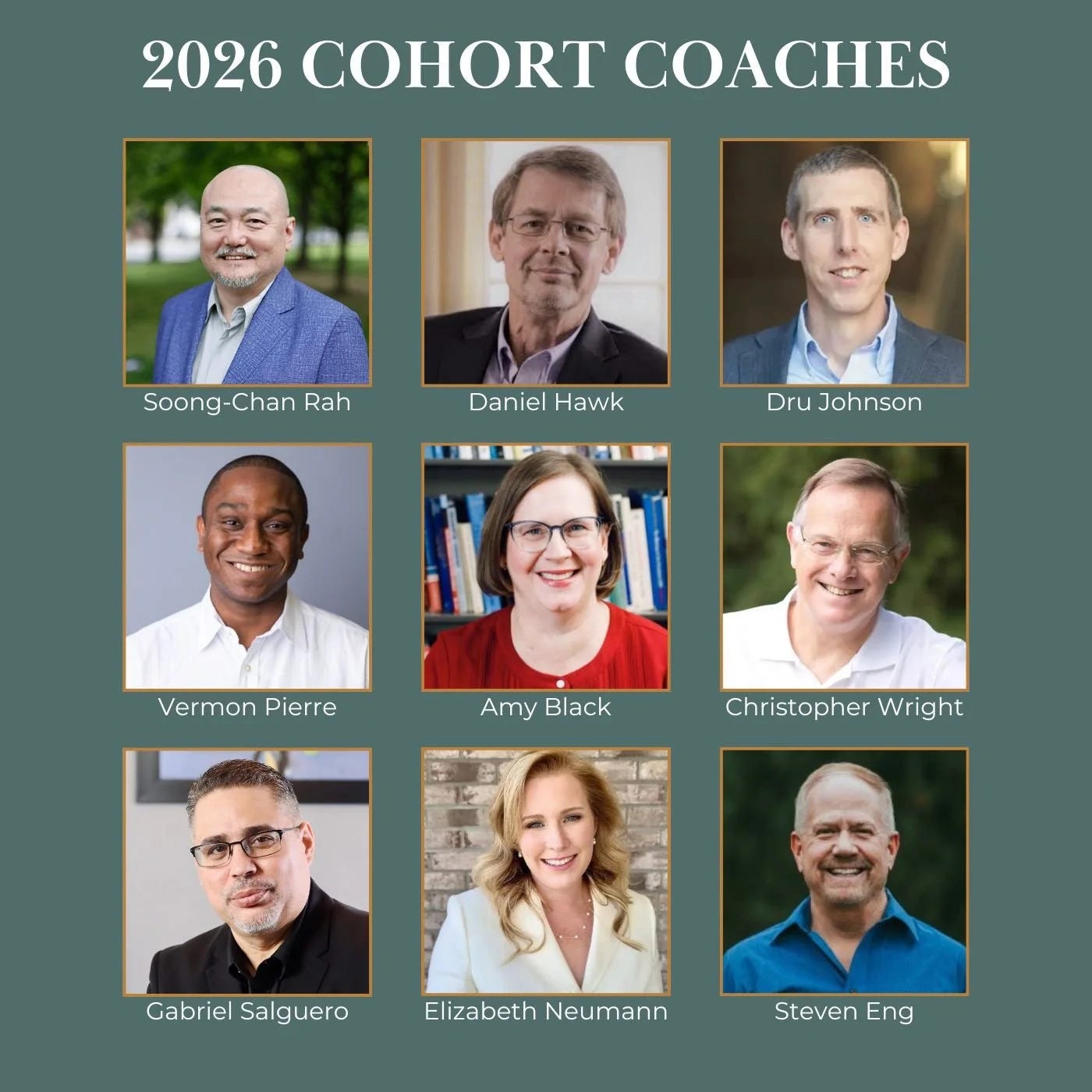
AVC’s pastor network, J29 Coalition, is taking applications for its next J29 Cohort. Send your pastor this link and encourage them to apply.
You can also help pastors participate in this program. By giving today, your donation will be doubled through a generous matching grant.
Some Other (Non-trivial) Reads
Cambridge U Press: “Moving Away from Extreme Views of Religion and Politics: A Dynamic Civil Religion”
Extreme voices dominate the national public debate in America over the proper role of religion and politics. Christian nationalists call for Christianity to dominate politics and culture. At the other extreme, strict secularists seek to remove all religious influence in the public square.
Unfortunate dynamics in American media coverage make it appear that these views are wider and deeper than they really are. Most Americans are not Christian nationalists, and most are not strict secularists. About one in ten American adults uphold the nativist, state-centric, and antidemocratic views found in pockets of the American right. At the other end of the spectrum, about one in six Americans are strict secularists who seek to remove all religious imprints on public life.
Most Americans reject both extremes, knowing that religion and politics will at times overlap and can do so constructively. As we detail in our recent book, religion and politics are deeply intertwined in American politics and have been for centuries. It is difficult but not impossible for seculars and people from myriad religious faiths to work together in a representative democracy.
Politico: “The New Right Has a Blueprint for Building a Christian America”
On paper, Brewington Farms will be a neighborhood like any other; in practice, it’s anything but. The development stands as the cornerstone of the Highland Rim Project, an audacious effort to build conservative Christian “charter communities” throughout Appalachia. Backed by the venture-capital firm New Founding, a Dallas-based fund with extensive ties to the ecosystem of conservative intellectuals and activists known as the New Right, the plan embodies that movement’s core conviction: that conservatives need to use the levers of public and private power to remake American life in their own image. As Abbotoy readily acknowledges, the project is as much an ideological experiment as an entrepreneurial one. What would it look like to build a microcosm of the New Right’s ideal society in the middle of central Tennessee?
Texas Tribune: “A Muslim Texan sought to find his place in the party at the state GOP convention. He left in tears.”
To some extent, Mohamed Hussein knew he was preparing to enter the lion’s den.
But he made the decision to attend the Republican Party of Texas Convention to confirm for himself that he had a place in the GOP, even as members of the party have railed for months about the urgency of ending Sharia Law and the so-called “Islamification” of Texas.
What he found was a party that didn’t want him. He arrived with hope, but left in tears after being told explicitly that he should leave the country.
Some Disturbing News
An instructor for AVC’s Mending Division Academy was recently arrested by police and fired from his church. You can read about it here. We decided to remove his content from our sites as we continue to discuss the best path forward.
